
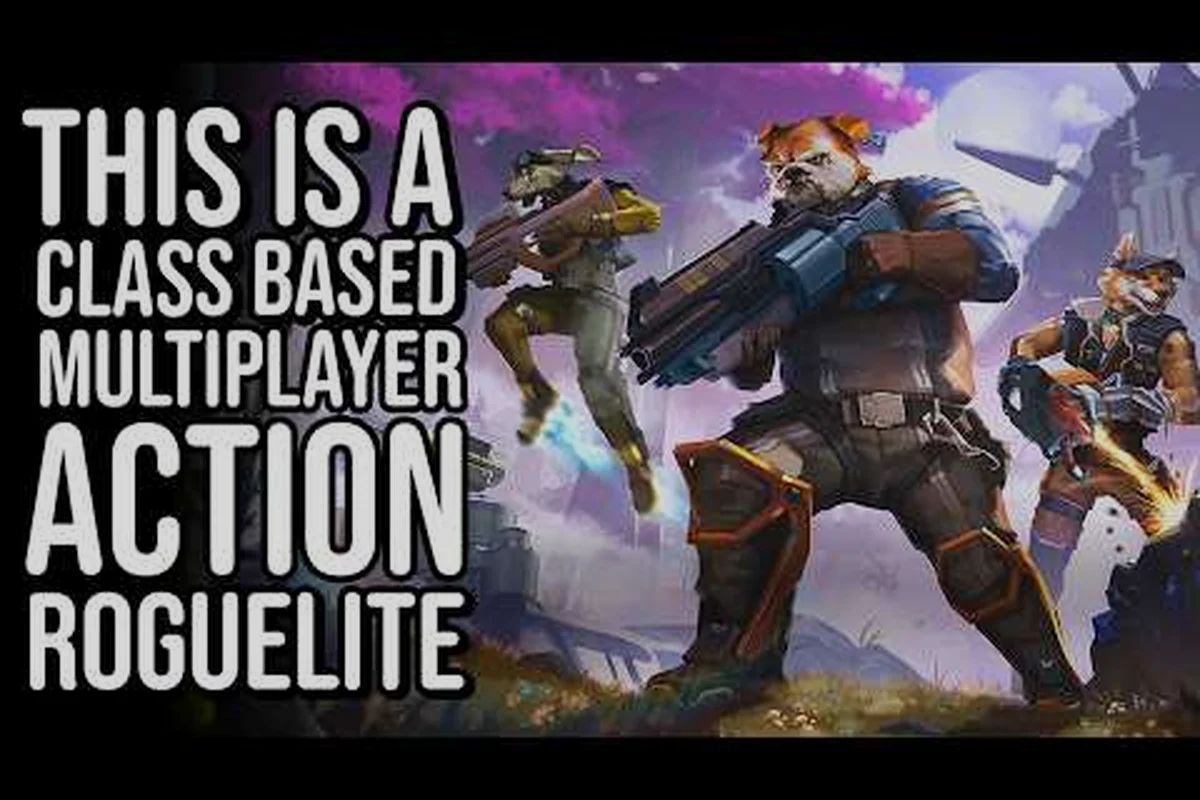
A gravhounds 4-player co-op session only works when everyone owns a real role, and this guide lays out what those duties should be. Learn the role split, per-position priorities, and communication habits that keep a full crew coordinated when the swarm escalates.
Gravhounds 4 Player Co op Starts With Better Roles
A strong gravhounds 4 player co op session depends on assigning real responsibilities instead of letting everyone crowd the same objective. Dividing scouting, gathering, crafting, and defense duties creates a more resilient crew, especially when a hunt turns hostile. Learn which setup works best for gravhounds up to 4 players before forming a full team.
GRAVHOUNDS supports up to four players, making each contribution significant. If you want to compare group play with a single-character run, our solo and co-op comparison explains when a team creates real advantages and when personal preparation still matters.
Building a Four-Player GRAVHOUNDS Crew
A balanced crew should feel less like four separate characters and more like one coordinated operation. One player can specialize in reconnaissance, another in resource gathering, a third in crafting or equipment support, and the fourth in area defense. These roles remain flexible, but they prevent duplicated effort and make the group easier to manage.
The Four Essential Crew Functions
Start by identifying the main tasks that occur during a session: finding useful locations, collecting materials, preparing equipment, and protecting the team while it works. Assign one primary owner and one backup for every function so the plan still works when someone is gathering loot, healing, or resolving equipment problems.
| Crew function | Primary responsibility | Secondary duty | Best contribution |
|---|---|---|---|
| Scout | Locate routes, threats, and useful resources | Mark travel hazards for everyone | Saves time and exposes ambushes early |
| Gatherer | Collect crafting and repair materials | Carry shared emergency supplies | Maintains the team’s resource buffer |
| Specialist | Prepare useful gear and consumables | Support teammates with equipment | Reduces wasted trips to the base |
| Defender | Guard the group and control entry points | Handle emergencies near the base | Protects workers and valuable equipment |
This division is a practical framework rather than a list of locked character classes, which lets a four-player GRAVHOUNDS crew adapt its role coverage instead of leaving one vital task unattended. If every player maintains two dependable gathering abilities, the scout can step into the defender role during an ambush without weakening material collection or equipment prep. For example, the gatherer can switch to the specialist’s consumables while the defender watches the entry point, keeping the four crew functions functional even when one player is looting, healing, or resolving equipment problems.
Keep Specialization Flexible
The best squad is useful when plans change. A player should be able to collect materials, travel safely, fight when necessary, and support teammates without needing a rare unlock. Role redundancy matters more than making every member narrowly specialized because the group may face a sudden route change, resource shortage, or defense event.
A quick way to test the balance is to remove one player mentally from the plan. If the remaining crew can still gather, travel, fight, and return with usable supplies, the group has a sound foundation. If several jobs collapse at once, redistribute them before starting another expedition.
Prepare Before the Full Team Assembles
Preparation should happen before the party is standing in the field. Each member can bring one type of resource, one defensive supply, and one way to identify a teammate who needs help. Voice chat is useful for that last point, but the same role can be communicated through pings and brief status calls.
| Preparation slot | Example choice | Reason to bring it |
|---|---|---|
| Primary resource | A material needed for the next objective | Reduces backtracking and gathering pressure |
| Defensive supply | Healing or temporary protection | Covers mistakes during travel or combat |
| Repair item | A common repair resource | Keeps equipment usable after a difficult encounter |
| Group marker | Route or danger ping | Keeps separated players aware of group movement |
Use the official GRAVHOUNDS gameplay overview from ID@XBOX to review the game’s official presentation before your group settles on a build. It is a useful shared reference, but each player should still confirm current equipment details in-game because interfaces and balance can change with updates.
Gravhounds 4 Player Co op Duties by Mission
Different objectives reward different arrangements. A gathering trip needs fewer defenders, while a defended base benefits from clear shifts and restricted access. The central rule is simple: assign people to the task that creates the largest bottleneck instead of spreading everyone evenly across every activity.
Gathering Runs
For an efficient supply run, place the scout ahead, keep the gatherer in the middle, and let the two remaining players protect the rear. The specialist can carry crafting materials rather than repeatedly mining the same resource. When the group reaches the extraction point, the defender checks the route while everyone else completes the collection.
| Run stage | Scout | Gatherer | Specialist | Defender |
|---|---|---|---|---|
| Travel | Lead and identify hazards | Follow the safest route | Carry selected tools | Watch the rear |
| Collection | Mark valuable deposits | Collect the agreed materials | Fill specialized-material slots | Cover the working area |
| Return | Confirm the exit route | Protect the primary loadout | Carry fragile or valuable items | Screen for followers |
| Base arrival | Report hazards | Deliver materials | Start the next preparation task | Check the perimeter |
Gathering runs should end with a clear handoff between the scout, gatherer, specialist, and defender so every material has an assigned carrier before extraction. Shared storage rules prevent several players from collecting duplicate materials while leaving a needed resource behind; for example, the gatherer can take the bulk ore, while the specialist reserves specialized slots for crafting components. Announce shortages before departure rather than after the team has traveled to an objective, since returning across the route costs more time and exposes the four-player GRAVHOUNDS team to additional hazards.
Defense Operations
A defense operation changes the priority. Everyone should understand where enemies can enter, where the group can retreat, and which signals mean “hold,” “fall back,” or “finished.” The defender owns the main approach, the scout rotates between access points, and the other two players protect each other rather than wandering into separate rooms.
Build the defense around layers, assigning a clear job to each member of the four-player GRAVHOUNDS squad so one threat does not pull everyone away from extraction. The defender should hold the main entrance with the best cover, the scout should rotate along the outer route and call out approaching threats, and the gatherer with the specialist should prioritize loot, repairs, and mission tasks while preserving a route to the fallback point.
-
Outer warning layer: The scout checks travel routes and reports movement before it reaches the base.
-
Protected work layer: The gatherer and specialist continue useful tasks without blocking one another.
-
Emergency response layer: The defender meets immediate threats while the others regroup at the agreed fallback position.
-
Recovery layer: A designated player watches health, equipment condition, and the remaining supply budget.
These layers matter because a full team can accidentally create more targets than it can control. If every player reacts to every noise, production stops and the base becomes difficult to defend; a single scout ping should therefore trigger a role-based response rather than pulling all four players into the same doorway. For example, if the scout reports movement on the outer route, the defender can hold the main entrance while the gatherer and specialist finish the current repair or loot task, preserving the fallback route and avoiding a split defense across multiple access points.
Expedition Runs
Expeditions are best treated as a compact unit. The scout marks the route, the gatherer decides whether the detour is worth the materials, the specialist preserves resources for an emergency, and the defender evaluates each risk before the group commits. The team should keep a retreat option rather than treating every discovery as mandatory.
For transport-heavy runs, decide in advance who carries priority cargo. That decision prevents slower players from falling behind and keeps the team from abandoning an item after a difficult fight. Players who want to compare platform-specific options can also review the Game Pass multiplayer platform overview.
Gravhounds Solo vs Co op: When a Team Is Better
Co-op provides more options, but coordination has a cost. A team can gather faster, cover separate routes, and handle threats from multiple directions. Solo play offers tighter control because one player manages every task without waiting for partners. The better choice depends on the objective, available equipment, and how much coordination the group can sustain.
| Situation | Solo advantage | Co-op advantage |
|---|---|---|
| Learning mechanics | Immediate control over every action | Friends can point out details and mistakes |
| Small supply run | No coordination delay | Faster collection and carrying capacity |
| Risky expedition | Fewer people to protect | More scouting and defensive coverage |
| Base preparation | Simple task ownership | Parallel crafting and production |
| High-pressure defense | Complete control of positioning | More targets covered at once |
| Limited communication | No voice or ping dependency | Clear roles reduce idle confusion |
The decisive advantage of a team appears when its members contribute different functions. Four players all doing the same task may move as slowly as one efficient player while creating more noise. A coordinated crew covers more ground because responsibilities are divided rather than duplicated.
Equipment and Communication Tradeoffs
Before inviting additional players, check whether everyone can contribute a useful activity. A new player with limited equipment may still provide scouting or carrying capacity, but experienced members should help them prepare. Do not assume that adding bodies automatically improves a run.
Communication should be concise. Agree on three signals: danger, regroup, and clear. Anything beyond those signals can wait until the immediate situation is stable. If voice chat is unavailable, use pings consistently and assign one player as the temporary route caller.
Shared readiness checks also reduce wasted travel in a four-player GRAVHOUNDS run. Before departure, assign roles for scouting, route calls, and carrying supplies, then confirm the objective, destination, return point, and one recovery item. A concrete example is setting a rendezvous marker at the extraction zone: if one player is separated, the group can regroup there instead of scattering across the map. This prevents four reasonable assumptions from becoming four different plans without requiring constant conversation.
Gravhounds Crossplay and Platform Coordination
Platform coordination matters because every member should enter the same session with compatible expectations. Your crossplay and matchmaking details provide a focused look at party formation, but practical communication remains the safest way to confirm which services, invite options, and save-related settings your group can use.
GRAVHOUNDS is associated with Xbox and Steam releases, and players commonly investigate platform grouping before organizing a mixed group. However, product pages, service availability, and update behavior can change. Check the current store information and the actual invite flow on each platform rather than relying on an old guide.
| Platform question | What the group should verify | Why it matters |
|---|---|---|
| Can friends join from another platform? | The current party and invite options | Determines whether a mixed group can form directly |
| Do all players own the required version? | Platform access and game entitlement | Prevents one player entering late or remaining outside |
| Is voice chat available? | Platform permissions and party setup | Supports clearer warnings and regroup calls |
| Can players use Steam Deck? | Controller layout and session access | Prevents avoidable control issues on handheld hardware |
| Are builds current? | Each client’s update status | Keeps equipment information consistent |
Players searching specifically for gravhounds xbox or gravhounds steam access should compare the same factors: entitlement, party formation, controller behavior, and update status. The game’s Xbox presence and Steam availability are easy entry points for a group, but successful sessions depend on checking the live client rather than assuming every version behaves identically.
Handle Mixed Input Devices
A group using different controllers needs consistent prompts and communication. Ask each player to select a familiar control scheme before the first objective, then avoid assigning tasks that depend on precise timing until everyone is comfortable. Keep menus, vehicle functions, and interaction commands consistent because a mismatch can slow an entire expedition.
Avoid using platform identity as a substitute for role. Whether someone joined through Xbox or Steam, the crew should assign duties based on current readiness and equipment. This creates a more neutral group and prevents a player from being left without a meaningful task simply because of the device they use.
Confirm the Session Before Starting
A brief readiness check prevents the most common coordination failures. Everyone should confirm that they are loaded, can hear or see group pings, and knows the current objective. If a player must leave, the remaining crew should have a plan for finishing the immediate task or returning safely to base.
Cross-session ownership is especially important for shared storage. Name the item that must be crafted, the destination that needs materials, and the item nobody should consume without agreement. This simple record is more reliable than assuming everyone saw the same chat message.
A Practical Co op Plan for a Full Session
A full session works best when it has phases rather than a single long objective. Begin with preparation, move into a focused expedition, secure the gathered materials, and finish with a defense or crafting task. Dividing the session this way prevents the group from drifting between unrelated goals.
The Four-Phase Session Plan
| Phase | Duration mindset | Group task | Key output |
|---|---|---|---|
| Preparation | Short and specific | Repair gear, choose objectives, assign roles | Ready inventory and agreed priority |
| Expedition | Focused | Gather, scout, and secure required materials | Required resources without unnecessary losses |
| Base transfer | Organized | Deliver materials and identify shortages | Stocked storage and next crafting goal |
| Defense or craft | Shared | Guard the base or produce agreed equipment | Safer base or completed preparation |
Use clear targets rather than vague aims such as “get resources.” “Collect the materials needed for the next base upgrade” creates a shared finish line. If several objectives are valid, rank them so the team can respond consistently when time, supplies, or equipment becomes limited.
Resolve Problems Before They Spread
Three issues can spoil a full group session: unmatched objectives, resource duplication, and unclear retreat decisions. Address them early. A short status check every few minutes costs less than reorganizing after the group has separated or returned with the wrong cargo.
| Problem | Early sign | Correction |
|---|---|---|
| Unmatched objectives | Players leave in different directions | Choose one primary and one optional task |
| Resource duplication | Several players collect the same item | Assign material categories before departure |
| Unclear retreat | Group continues despite a mounting threat | Set a fallback location and withdrawal condition |
| Uneven contribution | One player handles every critical job | Rotate backup duties and check equipment readiness |
| Communication overload | Repeated warnings interrupt every action | Use simple danger, regroup, and clear signals |
Shared trip checkpoints make corrections easy. At the start, midpoint, and return, briefly confirm that the crew still has the required items and that no one is carrying an essential item alone. This is especially helpful when a solo player temporarily joins a three-person team.
Build a Recovery Plan
Every expedition can go wrong, and a four-player group should not wait until an emergency to decide what matters. Choose one priority item to recover, one safe fallback position, and one condition that ends the run. The rest of the group can then support the recovery instead of scattering across the map.
Keep emergency supplies distributed rather than stored with one player. If that player is separated or defeated, the rest of the crew should still have a repair or healing option. Players can compare approaches in the broader co-op roles and party tips after establishing their own mission plan.
Building Habits for a Successful Four-Player Team
The strongest four-player teams improve through small operational habits rather than complicated rules. They use consistent signals, rotate backup duties, protect shared resources, and remain willing to change the plan when the current objective is not working. These habits make gravhounds 4 player co op sessions easier to repeat and more enjoyable for everyone involved.
Keep a Lightweight Group Checklist
Before every outing, the group should be able to answer five questions quickly: where are we going, what are we collecting, who carries the priority item, where do we regroup, and what causes us to leave? If any answer requires debate, the squad does not need to start yet.
Keep this checklist in a voice message, party note, or ready-made loadout reminder. It should be short enough that players will actually use it. A long document creates friction, while a five-line list gives everyone the same operational target.
Rotate Instead of Overloading
Avoid making one dependable player handle every difficult task. Rotate the defender during base work, swap the gatherer when routes change, and let newer members practice navigation. This prevents fatigue and creates redundant knowledge, which is particularly useful when a player must leave or a different objective appears.
Review After Each Major Run
After a major expedition, spend a few minutes comparing what worked. Was communication clear? Did the team arrive with enough supplies? Was the return route safe? Did one member spend the entire session without a defined task? These answers produce better assignments than general opinions about whether the run felt smooth.
The practical takeaway is simple: four specialized roles, one shared objective, and constant permission to adjust. That structure allows GRAVHOUNDS to feel less crowded in a full crew while giving the group the coverage needed to explore, gather, defend, and recover from setbacks. With the right preparation, a three-player squad can cover many jobs, and a complete party can take on ambitions that would be difficult to handle alone.
Frequently Asked Questions
Does GRAVHOUNDS support four-player co-op sessions?
GRAVHOUNDS supports groups of up to four players. The practical limit is successful coordination, because every additional member creates another inventory, objective, and communication channel. Give each player a clear function and assign backups so the crew keeps working when one member changes tasks or leaves temporarily.
Is playing solo better than joining a four-player crew?
Solo play gives you immediate control over gathering, travel, crafting, and combat, while co-op adds speed and coverage. Four-player sessions excel when members divide those jobs. If everyone duplicates the same task, however, a solo player may complete the objective more efficiently than an uncoordinated group.
Can GRAVHOUNDS players use Xbox and Steam together?
The game is available on Xbox and Steam, but players should verify the current party and invite options because cross-platform behavior can change with updates. Players interested in gravhounds crossplay should test the live build, confirm everyone owns the correct version, and agree on a voice or ping method before starting.
What is the best role for a fourth player in GRAVHOUNDS?
The best fourth role depends on the current objective. A defender can protect the base during gathering, a scout can prevent costly ambushes, and a specialist can keep the crew supplied with useful equipment. Avoid assigning a role based only on appearance; prioritize the abilities, items, and experience that address the group’s current bottleneck.
Should a GRAVHOUNDS crew prepare separate loadouts?
Prepare complementary rather than identical loadouts. Give each player a meaningful job, distribute critical emergency items, and assign who carries priority cargo before departure. Shared storage and clear handoffs matter more than exact equipment equality, especially when the group is exploring different routes.