
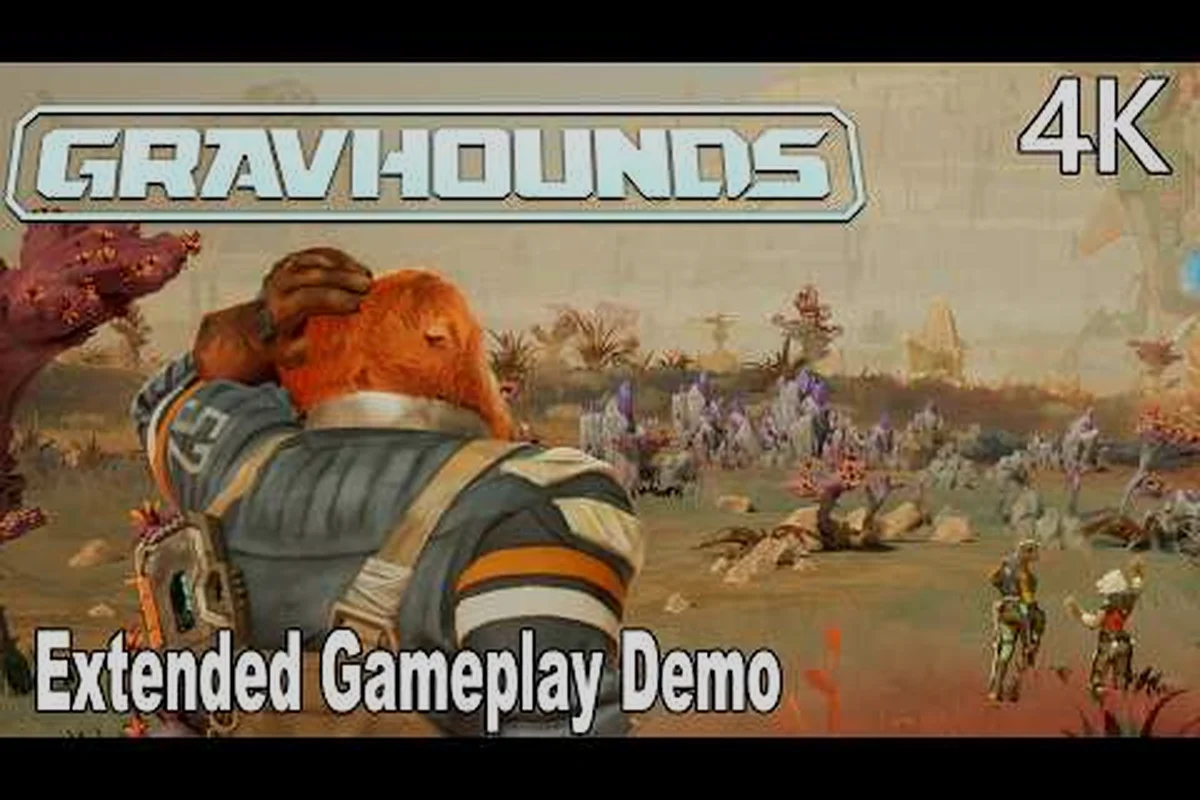
The gravhounds demo matters because it gives PC and Xbox players an early look at GRAVHOUNDS’ co-op extraction action and its route toward version 1.0. Learn what is playable, how updates shape the test, and what to watch next.
GRAVHOUNDS Demo Overview and Early Access Goals
The gravhounds demo serves as the clearest practical introduction to GRAVHOUNDS’ current systems, platform availability, and development direction. It is more than a short trial: the playable build gives players a chance to experience the core risk-and-reward loop while the developer continues refining balance, controls, content, and stability before version 1.0.
GRAVHOUNDS is presented through an official gameplay overview published by ID@Xbox, whose video runs 4 minutes and 22 seconds. That overview establishes the game’s playable co-op action focus and provides a useful baseline for understanding what the gravhounds demo is testing. The developer’s own material is especially important while the game remains in Early Access, because features and presentation may change across platforms and revisions.
The demo is associated with availability on PC and Xbox. Players who need installation details can consult the gravhounds demo download guide, while this article focuses on what the playable build communicates about the game’s development and its path to the full release.
What the Playable Build Represents
The gravhounds playtest is best understood as an active development snapshot rather than a finished preview of every planned feature. Its purpose is to expose the central action loop to real players so the team can identify practical issues that internal testing may miss. Those problems can range from mission readability and extraction decisions to weapon handling, co-op coordination, and the clarity of progression rewards.
This distinction matters for interpreting feedback. A mechanic that feels awkward may have been deliberately simplified for testing, while an incomplete menu or uneven difficulty curve may represent work still underway. The strongest evaluation is therefore based on repeated runs, clear observations, and understanding which parts of GRAVHOUNDS are temporary placeholders.
| Playable-test purpose | What players can evaluate | What may still change before version 1.0 |
|---|---|---|
| Combat evaluation | Weapon handling, enemy pressure, co-op coordination | Damage, health, cooldown, and encounter pacing |
| Mission evaluation | Objectives, reward flow, extraction decisions | Mission layouts, rewards, and difficulty balancing |
| Progression evaluation | Item usefulness and decision-making | Economy, rarity values, and unlock rules |
| Stability evaluation | Performance, saves, networking, and input consistency | Platform-specific fixes and quality-of-life adjustments |
| Scope evaluation | Character variety and encounter variety | New modes, missions, enemies, and refinement |
The build should also be judged as evidence of the project’s direction. The developer is using this phase to turn broad ideas into a stable release, which is why version 1.0 depends on more than simply adding content. A successful launch requires the rules to remain understandable and the tension between securing loot and leaving safely to survive repeated play.
Why Early Access Feedback Matters
Early Access works best when feedback identifies causes rather than merely expressing approval or disappointment. “A mission feels difficult” is less useful than a report explaining which enemy interrupted an extraction, whether the warning was visible, and what resource or decision changed the outcome. Specific observations make it easier to reproduce problems and determine whether a fix belongs in combat, mission design, rewards, or communication.
This is especially relevant to a gravhounds playtest because co-op can conceal problems that appear obvious in solo testing. A partner may revive a struggling player, cover an enemy, or create an extraction route that removes the pressure the encounter was intended to create. Testing the game in groups of two or more can therefore reveal both balance issues and coordination opportunities.
GRAVHOUNDS Demo Features, Modes, and Co-op Value
The official overview’s most important promise is playable co-op action. In practical terms, that means players can approach GRAVHOUNDS as a team, share risk, divide attention, and make extraction decisions based on more than one person’s perspective. The combination creates a useful test bed for determining whether the action remains readable when several players must react at once.
Co-op is a system test, not merely a multiplayer setting. It reveals whether enemies can be divided efficiently, whether abilities overlap too heavily, whether revive rules feel fair, and whether a successful run depends on communication rather than perfect individual execution. Players entering the gravhounds demo should watch how each element behaves under pressure rather than judging the game only by total damage or loot value.
Reading the Core Action Loop
A typical evaluation can be organized around a compact sequence. First, assess the starting loadout and identify which roles are available. Then enter the playable space, observe how information is communicated, and test whether the team can prioritize targets. After securing resources, compare the risk of continuing with the risk of extracting, and finally record which decisions made the run strong or frustrating.
| Phase | Primary test question | Useful player observation |
|---|---|---|
| Preparation | Can players understand their available options? | Which choices require explanation or repeated testing? |
| Engagement | Does the team identify priorities quickly? | Are enemy threats communicated clearly? |
| Loot decision | Does the team agree on continuing or leaving? | Does the reward decision create genuine tension? |
| Extraction | Can players retreat under pressure? | Are route, timer, and status effects understandable? |
| Results | Does the run teach a useful lesson? | Which outcome felt fair, random, or manipulative? |
The Extraction Decision is particularly important because it connects combat performance to mission pacing. A player who performs well may still make a poor choice if they cannot judge when the current reward is worth the added exposure. By comparing successful and failed runs, the team can see whether the decision is based on meaningful information or merely guesswork.
For a wider look at the available interface and encounter flow, the demo play and extraction guide provides a practical foundation for reading GRAVHOUNDS’ combat cues, loadout options, and extraction pressure before teams begin comparing encounters. Its step-by-step breakdown is especially useful for checking whether players recognize enemy priorities, understand the status and timer information shown during an extraction, and can reach a shared loot decision without relying on guesswork.
Solo and Co-op Comparisons
Solo play and co-op should not be treated as interchangeable difficulty settings. A smaller team usually has less immediate area control and fewer opportunities to divide objectives, but it can also benefit from tighter coordination because each player carries more responsibility. Co-op introduces additional power and flexibility, yet it can also turn responsibility ambiguous if the team never assigns roles.
| Test area | Solo evaluation | Co-op evaluation |
|---|---|---|
| Enemy control | Can one player create enough space? | Can roles prevent enemies from surrounding the team? |
| Resource use | Is every item justified by limited capacity? | Is a shared economy created, or does one player carry the burden? |
| Extraction | Can the player read danger alone? | Does the team agree on when to disengage? |
| Failure recovery | Are retreat and recovery options clear? | Can teammates rescue one another without trivializing danger? |
| Learning value | Does each attempt teach a new decision? | Does communication improve as the team learns? |
The best test group includes players with different levels of familiarity. Experienced participants can focus on deeper balance, while newer participants reveal onboarding problems that veterans may unconsciously overlook. That contrast is useful during the gravhounds playtest because a mechanic can function mechanically while still being confusing to the audience the final release needs to satisfy.
GRAVHOUNDS Version 1.0 Roadmap and Update Signals
The most important early-access question is not whether every placeholder has become final; it is whether the game’s central systems now point clearly toward version 1.0. That includes combat readability, mission structure, item decisions, co-op stability, and a progression loop capable of supporting sustained play. A version 1.0 announcement becomes more meaningful when players can see the systems behind it becoming coherent.
The current Development Scope Baseline is therefore better understood as a set of checkpoints than a single launch date. The supplied information does not provide a verified calendar date for version 1.0, so any precise claim would be speculative. What it does provide is a live development cycle in which the demo and subsequent patches communicate priorities through changes, fixes, and new content.
Reading GRAVHOUNDS Updates as Milestones
Not every update carries the same significance. Some patches may resolve technical defects, while others may alter combat values, mission objectives, rewards, or the broader structure of play. Players should identify the category of each change before judging whether the update moves GRAVHOUNDS closer to 1.0.
| Update category | Main sign of progress | Example player check |
|---|---|---|
| Stability patch | Fewer interruptions and clearer state preservation | Are multiplayer sessions, saves, and progression stable? |
| Balance patch | More consistent decisions across playstyles | Are weapons, enemies, and rewards creating fair tradeoffs? |
| Content update | Greater variety without breaking the core loop | Do new missions and enemies support distinct strategies? |
| UX update | Faster understanding of important information | Are objectives, extraction warnings, and rewards easier to read? |
| Systems update | A stronger foundation for the full game | Are progression and mission structures coherent at longer scale? |
The Scope-Versus-Polish Tradeoff deserves attention. Adding more content can make the demo feel varied, but additional missions and enemies will not improve the release if their rewards, difficulty, or presentation remain unclear. Conversely, polishing a limited set of encounters can reveal more about the final experience than a large quantity of unfinished variety. A useful update should therefore make the game’s rules more dependable while expanding what players can test.
Players can also distinguish announcements from measurable outcomes by checking the associated demo release and patch details. A claim becomes more credible when players can verify the change in the playable build, while an item described as planned should not be treated as guaranteed.
News That Earns Attention
The most relevant gravhounds news concerns improvements that alter the relationship between risk and reward. A small increase in enemy complexity matters if it creates better tactical choices without making extraction arbitrary. A new item matters if it supports a distinct build rather than simply replacing an old option with a stronger number. A new mode matters if it uses the existing systems coherently.
The strongest announcement should answer several concrete questions: which gravhounds updates changed the demo’s combat, mission, progression, or technical foundation; whether the design improves risk-reward decisions instead of merely increasing enemy difficulty; whether new gravhounds playtest options support distinct builds rather than becoming stronger replacements; and whether a gravhounds version 1.0 roadmap exists. It should also distinguish a genuine announcement from routine promotional material by linking each claim to a repeatable test players can perform during the gravhounds demo.
-
What changed? Identify the combat, mission, progression, technical, or platform-facing focus.
-
Why was it changed? A balance or design goal is more useful than a list of modified values without context.
-
How can players test it? A repeatable encounter or controlled comparison helps the community evaluate the result.
-
Does it support version 1.0? The change should improve depth, stability, clarity, or long-term replay value.
Because Early Access builds can move quickly, these criteria help separate meaningful development signals from routine promotional material in the gravhounds demo. The Evidence Standard is simple: an announcement establishes intent, but repeatable play validates the result. For example, a proposed enemy-complexity increase matters only when players can compare extraction outcomes against the previous encounter; likewise, a new equipment option should demonstrate a distinct tactical role in a gravhounds playtest, not merely offer a higher damage number. Changes that improve combat depth, mission clarity, progression, stability, or platform performance also provide stronger evidence of progress toward gravhounds version 1.0 than release-date hype alone.
Practical Ways to Test the GRAVHOUNDS Demo
A structured test produces more value than an unstructured session because it separates personal preference from genuine design issues. Before playing, decide which area the group will examine. During the run, record concrete events rather than general impressions. Afterward, compare results across two or more attempts so that one unusual outcome does not define the assessment.
Players can follow the beginner priorities for the demo to establish a workable routine, then supplement that routine with focused tests of the systems they suspect need attention. The method works for solo sessions and co-op groups, although co-op teams should also document communication issues separately from mechanical ones.
A Four-Session Testing Cycle
The first session can establish a baseline. Players should avoid changing too many variables at once, because otherwise it becomes impossible to identify what caused an improvement or failure. The goal is not to win repeatedly; it is to understand the rules and identify points of confusion.
The second session can examine one selected system, such as weapons, extraction, or mission progression. The third can test the same system with a different loadout or team composition. The fourth can revisit the original scenario under comparable conditions, which shows whether the difference comes from the update or from player learning.
| Session | Controlled variable | Evidence to capture |
|---|---|---|
| Baseline | Standard loadout and team size | Completion rate, confusing moments, extraction decisions |
| Focused test | One weapon, enemy, or mission type | Repeated outcomes and cause of failure |
| Comparison | Different role or player experience level | Which choices changed and whether they remained viable |
| Verification | Return to the original scenario | Whether the earlier issue still appears |
This cycle is particularly effective for the gravhounds updates arriving during Early Access. It allows a team to distinguish an intentional balance adjustment from random variation, and it provides the developer with a report that includes context rather than an unsupported conclusion.
A Useful Observation Log
Record the mission, team size, approximate attempt number, and result before writing a longer explanation. Add notes on enemy behavior, objective clarity, item value, and extraction timing. A screenshot or timestamp can help when an issue depends on a visual warning, although the most important details should remain understandable in plain text.
Reproduction Frequency is a valuable field because it separates isolated events from consistent failures. If an extraction warning appears on only one run out of ten, it may still be important, but the team should check controls, timing, and visual obstruction before labeling it a consistent defect. Conversely, repeated confusion across every run is unlikely to be an isolated misunderstanding.
Evaluating Characters, Weapons, and Builds
Comparisons are most useful when they isolate a variable. Changing weapon, character, team size, and mission simultaneously may produce an interesting run, but it cannot identify which choice caused the outcome. A Build Matrix helps separate roles from simple power rankings and can be revisited after each patch.
| Test build | Intended advantage | Primary weakness to examine |
|---|---|---|
| Fast damage build | Quick enemy removal | Durability and exposure during extraction |
| Sustained damage build | Hold ground through longer encounters | Resource management |
| Utility-focused build | Team support and control | Lower immediate damage |
| Mobility-focused build | Repositioning and escape options | Damage tradeoffs and timing demands |
Players should also use the current GRAVHOUNDS tier list as a temporary reference rather than a permanent verdict. Early-access balance can alter a build’s value, and co-op composition may matter as much as the individual selection. A stronger character in one scenario can still be less consistent when the team lacks the right support.
Interpreting the GRAVHOUNDS Announcement and Launch Readiness
Launch readiness is a combination of systems quality and communication quality. The demo needs to prove that the central loop works, while the developer needs to communicate what is changing and why. When those parts align, gravhounds news becomes a practical map of development rather than a sequence of disconnected announcements.
A useful evaluation separates Feature Presence from Feature Completion. A feature can exist in the build while remaining unfinished, and a smaller feature can be more launch-ready if it works consistently. The same distinction applies to the broader game: version 1.0 requires more than a large roster or long mission list if the underlying action remains unclear.
Readiness Checklist for Version 1.0
Review the playable build across several sessions and look for consistent behavior. First, confirm that players can identify their objective and understand success conditions. Next, test whether combat rewards remain meaningful without erasing preparation. Then examine whether co-op coordination improves play without allowing teammates to bypass every threat.
| Readiness area | Strong signal | Warning sign |
|---|---|---|
| Core loop | Preparation, risk, reward, and extraction form a clear cycle | Progress feels disconnected from the action |
| Combat | Tools and enemies produce understandable tradeoffs | One option or tactic dominates every situation |
| Co-op | Roles complement one another and failures remain meaningful | Cooperation is optional or responsibility becomes unclear |
| Progression | Unlocks add new decisions and replay value | Rewards only increase existing numbers |
| Presentation | Objectives, warnings, and results remain legible | Players infer rules through repeated failures |
| Stability | Saves, networking, controls, and performance feel dependable | Routine interruptions disrupt longer sessions |
The Experience Curve should be judged separately from raw difficulty. A difficult game can be fair if players receive clear information and can form a better plan after failure. By contrast, difficulty caused by hidden rules can make repeated attempts feel arbitrary. The version 1.0 target should preserve tension without requiring outside explanations for every routine decision.
What Future GRAVHOUNDS Updates Should Reveal
The next meaningful updates should demonstrate direction, not only scale. Ideally, developers will communicate when a change improves readability, closes a gameplay gap, or prepares content for launch. They should also distinguish temporary testing adjustments from enduring rules so players do not build plans around features that are about to be replaced.
Useful signals include clearer tutorials, more varied mission objectives, improved reward presentation, and co-op features that support different team sizes. Equally informative are honest balance notes that identify what changed and which previous behavior has been adjusted. The goal is a stable relationship between development and players, not simply a longer announcement list.
A practical Announcement Audit asks four questions: Is the change visible in play? Does it solve a recognizable problem? Does it fit the existing systems? Does it clarify expectations for version 1.0? An update that fails one of those questions may still have value, but its contribution to launch readiness should not be overstated.
The strongest conclusion from the current evidence is that GRAVHOUNDS has a playable co-op foundation and an active Early Access process. The exact version 1.0 timing remains unverified, so the responsible approach is to follow verified announcements, test updates through repeatable comparisons, and judge readiness by the consistency of the whole experience.
Frequently Asked Questions
What platforms are available for the gravhounds demo?
The gravhounds demo is associated with PC and Xbox availability. Installation details can vary by platform and current build, so players should use the official channel associated with their device and confirm the latest download instructions before starting a session.
Can the GRAVHOUNDS demo be played in co-op?
Yes. Playable co-op action is a central focus of the current GRAVHOUNDS presentation. Groups can test role division, target prioritization, shared rewards, and extraction decisions, although co-op balance should be compared under similar team sizes for a useful evaluation.
When will GRAVHOUNDS reach version 1.0?
A verified release date for version 1.0 has not been established in the available information. Players should treat version 1.0 as the stated development destination and watch official announcements for a firm schedule rather than relying on community estimates.
What should players examine in the latest GRAVHOUNDS updates?
Players should compare updates through repeated runs, focusing on changes in combat, missions, rewards, stability, and co-op coordination. The demo release and patch overview can help organize release notes, while repeatable testing reveals whether an adjustment improves the actual experience.
Is the gravhounds playtest worth playing before version 1.0?
The gravhounds playtest is valuable for players interested in co-op extraction action because it provides direct access to the current systems while development remains active. Test sessions are especially useful for spotting balance issues, identifying confusing rules, and understanding how the planned version 1.0 path is taking shape.