
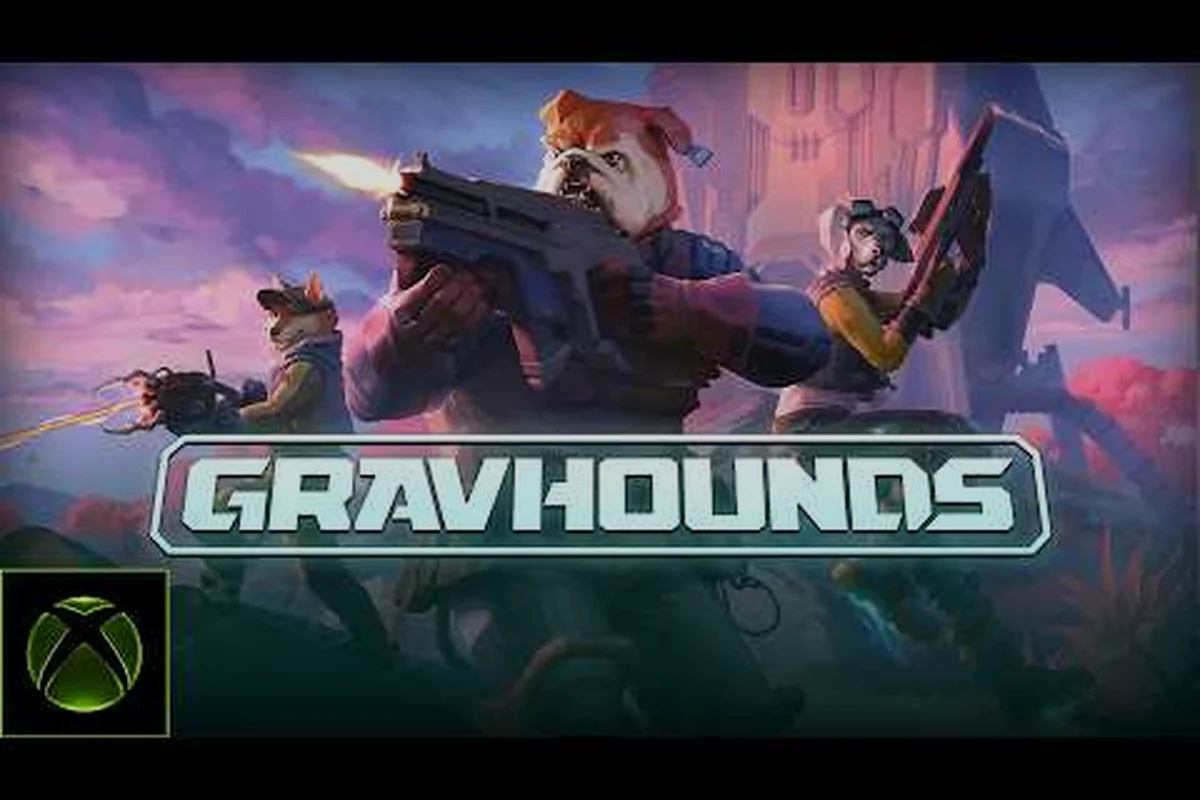
GRAVHOUNDS developer notes give players a concrete view of what to expect from the six-month Early Access period, including the planned roadmap, launch pricing, and the direction signaled by the gamescom 2026 reveals. They also establish a baseline for reading later GRAVHOUNDS patch notes: feature additions, balance adjustments, and other roadmap changes can be compared against the developer’s stated priorities instead of treated as isolated updates.
GRAVHOUNDS Developer Notes: Early Access Overview
The latest GRAVHOUNDS developer notes outline a structured six-month Early Access period leading toward version 1.0. Rather than treating Early Access as a vague release state, this plan gives players a clearer picture of development priorities, expected feature groups, and the type of balance work likely to shape the launch build.
Understanding the schedule matters because Early Access releases can change quickly. A developer may revise a milestone, adjust balance values, or defer content while testing reveals problems. Treating the roadmap as a working plan rather than a guarantee helps players distinguish firm commitments from features that remain under evaluation.
| Roadmap element | Confirmed direction | What it means for players |
|---|---|---|
| Early Access duration | Six-month development window | A defined period for testing and refinement |
| Final milestone | Planned version 1.0 | A clear target for feature completion |
| Major reveal | gamescom 2026 coverage | New information beyond the initial announcement |
| Commercial details | GRAVHOUNDS price remains a key concern | Purchase timing matters for early supporters |
| Ongoing communication | Patch notes and developer updates | Balance changes should remain visible to players |
What the Six-Month Plan Establishes
The central promise is a progression from an experimental build toward a more complete release. This matters for newcomers because it suggests that mechanics may still change, but that those changes are connected to a defined development goal rather than an indefinite stream of unfinished additions.
Players should pay close attention to feature milestones because a milestone can affect every part of a run. Character functionality, mission structure, progression rewards, and encounter difficulty may need to work together before the developers treat a section as complete. A feature appearing in a preview does not always mean it is ready for permanent use.
The roadmap also creates a better way to interpret version 1.0 criteria. Reaching the final label should mean the developers consider the major planned systems stable enough for a broader release, although exact acceptance standards have not been publicly detailed in the available notes.
Which Announcements to Track
The most useful updates will be those that explain a change in player experience. A new enemy is easy to notice, while a revised damage formula or progression requirement can be just as consequential. The roadmap is therefore most useful when read alongside the regular gravhounds patch notes.
-
Feature completion: New mechanics moving from preview to finished status.
-
Balance revisions: Changes to character power, enemy pressure, rewards, or mission difficulty.
-
Technical improvements: Progress on performance, controls, networking, and visual consistency.
-
Content readiness: Confirmation that missions, environments, or opponents are ready for longer-term testing.
This structure gives the roadmap a practical role beyond a simple feature checklist. It does not replace individual gravhounds patch notes; instead, it shows how each balance revision, technical improvement, content milestone, and feature-completion update contributes to the broader six-month plan. For example, a change to mission difficulty or enemy pressure is more meaningful when the roadmap identifies it as part of preparing missions, environments, and opponents for longer-term testing ahead of version 1.0.
GRAVHOUNDS Gamescom 2026 Reveals and Trailer Coverage
The gamescom 2026 presentation added another layer to the GRAVHOUNDS roadmap by showing where development currently stands. For players, the value of an event presentation is not only in the footage itself but also in the contrast between what appears in the trailer and what is ready to play during Early Access.
The presentation should be read as a window into the project’s current direction. Cinematic sequences can combine several polished moments, while an actual play session includes input latency, mission setup, character selection, and difficulty adjustments. Knowing the difference prevents trailer footage from being treated as a promise of final quality.
| Coverage area | What the presentation can establish | Question left for development updates |
|---|---|---|
| Character roster | Which specialists and classes are being highlighted | When will the full roster be finalized? |
| Combat style | How movement, aiming, and attacks appear together | Which balance values will change? |
| Mission direction | Which environments and objectives are emphasized | Are all shown missions available in Early Access? |
| Visual progress | Current character, weapon, and environment models | How much polish remains before launch? |
| Development status | Which features appear active or under construction | Which systems are nearest completion? |
Reading the Gamescom Trailer Accurately
The gamescom trailer is most useful when separated into three layers: gameplay systems, production presentation, and unresolved questions. Gameplay systems include combat, movement, and objective design. Production presentation covers lighting, animation, interface clarity, and audiovisual polish. Unresolved questions concern unfinished features and uncertain launch timing.
This separation also prevents one common mistake: assuming that a feature shown at a major event must already be fully implemented. A trailer often demonstrates the intended experience, while Early Access players may encounter a more limited implementation. Future patch notes should clarify when a displayed feature becomes available in ordinary play.
The presentation’s broader significance is the visibility it creates. Showing the project at gamescom gives the team a chance to explain its identity to new audiences while also setting a benchmark for updates. That benchmark makes it easier to judge whether combat readability and mission pacing are improving between announcements.
What the Reveal Does Not Guarantee
A public trailer can showcase intended features, but it cannot establish a release date for every item. It also does not guarantee final balance, because polished footage usually does not reveal the numerical cost of a weapon, the frequency of an enemy, or the length of a mission.
Early Access should be treated as the testing layer between public presentation and version 1.0, with observed outcomes feeding directly into balance decisions. For example, if an objective consistently takes too long because enemy density rises too sharply, the team can adjust encounter spacing or patrol frequency before release; likewise, early tests of each character role can expose whether some roles have too few viable options compared with others. Because these parameters remain subject to change during Early Access, any numbers seen in the Gamescom 2026 trailer should be treated as provisional rather than fixed specifications.
Community reaction and player reports remain useful for identifying friction, but they should not be confused with a confirmed development schedule. The safest interpretation combines the presentation, the developer roadmap, and later patch records rather than relying on any one announcement alone.
GRAVHOUNDS Roadmap: Major Development Themes
The gravhounds roadmap appears organized around progressive refinement rather than one oversized launch update. That structure gives the six-month period a practical rhythm: introduce or clarify core systems, test them under sustained play, adjust balance and presentation, and prepare the completed package for version 1.0.
A roadmap is not a promise that every listed system will remain untouched. It is a statement of intended priorities. When production constraints appear, the developers may narrow the feature set, revise implementation order, or change how a feature behaves. Checking the dates on later updates is therefore essential for evaluating progress accurately.
| Development phase | Likely emphasis | Evidence to monitor |
|---|---|---|
| Early foundation | Core combat, characters, and missions | Feature labels and initial balance changes |
| Middle testing | Expansion and refinement | New content, quality-of-life additions, and tuning |
| Late testing | Stability and launch preparation | Performance work, bug fixes, and final balancing |
| Version 1.0 target | Consolidated release candidate | Remaining issues and any revised feature list |
| Post-1.0 period | Continued support and expansion | Priorities communicated after the launch milestone |
Feature Depth Versus Feature Count
Adding a large number of missions or characters is not automatically the same as building a complete game. Each addition creates new interactions with progression, difficulty, economy, and team composition. A focused roadmap can therefore produce a better launch than a long list of disconnected content.
The central quality marker is system integration. A mission is more than complete when its ending appears; enemies must provide an appropriate challenge, rewards must support progression, and difficulty must remain readable across different team compositions. This is where detailed patch notes become more informative than headline announcements.
Balance, Progression, and Replayability
Three development themes are likely to shape the player experience: combat balance, progression clarity, and replayable missions. Balance work can alter which weapons and characters feel strongest. Progression work determines whether gains arrive clearly and fairly. Replayability depends on objectives that remain engaging without becoming repetitive or excessively punishing.
Players can use hero strength snapshots to track changes between patches, especially when a character begins performing far above or below the rest of the roster. The broader current GRAVHOUNDS tier list can help organize those observations, while individual patch notes provide the more precise cause of a shift.
How Players Can Audit Roadmap Progress
A simple progress log makes the roadmap easier to evaluate. Record the promised feature, the update that introduced it, the first meaningful balance adjustment, and the current status. This creates a clearer history than repeatedly comparing promotional material with the latest build.
The same method works for mission stability and technical quality. If an objective appears in an update but later receives repeated corrections, it is still in active refinement. Completion should therefore mean that the system is functioning as intended, not merely that it has appeared in a release headline.
GRAVHOUNDS Price and Early Access Buying Decisions
The announced GRAVHOUNDS price is one of the most practical pieces of information in the developer notes because it affects both purchase timing and expectations. The six-month Early Access window gives buyers a defined period in which the game can change, so the relevant decision is not only whether the listed price fits a budget but also whether access during active development is worth the tradeoffs.
Price alone does not reveal the final value of version 1.0. Players should compare the launch promise with the cost of supporting the project early, then consider whether they want to influence refinement, test unfinished systems immediately, or wait for a more stable release.
| Buying consideration | Early Access choice | Version 1.0 choice |
|---|---|---|
| Product state | Active development and changing balance | More consolidated feature set |
| Purchase timing | Before all planned work is finished | After the targeted launch milestone |
| Main benefit | Early access and influence on refinement | A more stable presentation of the planned game |
| Main risk | Features and balance may change | Later access and possible price uncertainty |
| Best decision basis | Roadmap clarity, replayability, price | Final feature list, stability, and reviews |
Price Versus Product Value
A lower early price can make participation more attractive, but value also depends on how much of the roadmap is playable and how well the systems work together. Paying to test an unfinished feature has different value from paying for a polished release. That distinction should guide expectations before purchase.
Players who want a stable, rules-based environment may prefer waiting. Those who enjoy discovering balance changes and testing unfinished systems may find Early Access more rewarding. The strongest reason is personal preference, not a claim that one version is automatically better for everyone.
Practical Purchase Checklist
Before buying, confirm the current store listing and regional price. Store pages can change, and discount status may vary by region and date. The developer notes provide context, but the purchase screen remains the authoritative source for the amount charged.
A useful checklist includes: treat the developer notes as a scope-tracking tool by comparing the six-month Early Access window with the planned version 1.0 goals, since gameplay features may arrive before or after full release. Use the Gamescom 2026 trailer and announcements to identify developer-stated priorities, then check the gravhounds roadmap and patch notes for confirmation. This distinction helps separate confirmed development targets from tentative schedule information and avoids inferring launch content from a single promotional reveal.
-
Verify the current regional price on the official store page.
-
Review which features are available during the six-month period.
-
Compare the Early Access and version 1.0 scope.
-
Check recent gravhounds patch notes for stability concerns.
-
Review the broader Early Access launch and content roadmap for schedule context.
Refund and Purchase Risk
Because Early Access products can vary in policy and legal requirements by store and region, buyers should read the current refund terms rather than relying on general expectations. A game may change significantly during development, but that does not guarantee a particular refund outcome in every case.
Understanding the price also prevents a second mistake: mistaking a temporary discount for a permanent base price. Likewise, the absence of a final version 1.0 feature list does not mean content outside the roadmap is impossible; it means the current documentation is not yet complete. Compare official information at the moment of purchase.
GRAVHOUNDS Patch Notes: How to Track Development
Patch notes are the most precise record of how the roadmap becomes a playable build. While the gravhounds roadmap communicates broad priorities, update records explain what changed, what remains experimental, and whether a fix altered something that players had already learned.
Reading patch notes efficiently begins with separating fixes from system changes. A crash correction usually has less long-term impact than a revised health system, mission timer, or weapon statistic. Both matter, although they answer different questions about development progress.
| Patch-note category | What to inspect | Why it matters |
|---|---|---|
| Bug fixes | Reproducible issues and persistence problems | Shows whether quality is improving |
| Character changes | Health, abilities, cooldowns, or role changes | Can alter team viability |
| Weapon changes | Damage, handling, rarity, or ammunition | Affects preferred loadouts |
| Enemy changes | Health, behavior, spawn rates, or damage | Reshapes mission difficulty |
| Mission changes | Objectives, rewards, length, or failure rules | Influences replay value |
| Quality of life | Controls, settings, guidance, and accessibility | Reduces friction without changing core balance |
| Known issues | Workarounds and unresolved problems | Signals the current stability level |
Build a Personal Change Log
A personal log is useful because large updates often contain more changes than any single session can absorb. Record the patch date, the affected system, the old behavior, the new behavior, and your own follow-up test. This creates a test plan for the next session instead of an unstructured impression.
For example, note the enemy attack cadence before and after an update. If damage per hit increased while the wind-up became easier to read, a small sample of fights may not reveal the net effect. Comparing both variables gives a more reliable picture than watching a single success or defeat.
Test Changes in Isolation
One mission may not be enough to evaluate a balance modification. Pick a repeatable encounter, use a consistent character and loadout, and record several attempts. The objective is not to declare a permanent tier; it is to determine whether the intended change is working as described.
The post-patch character rankings can organize the broader community’s observed results. Treat them as a snapshot of each GRAVHOUNDS character’s practical performance rather than a permanent balance verdict: if an update adjusts health, damage, movement speed, or ability timing, matchups can reverse without any change in player skill. Compare the same character on the same mission before and after the patch, then note how the ranking explains—or fails to explain—your repeated attempts; a tier-list position is most useful when it points to a concrete interaction worth retesting.
Why Notes Matter After Version 1.0
Reaching version 1.0 ends the stated six-month Early Access schedule, but it does not end the need for transparent change records. A completed release can still receive balance adjustments, bug fixes, new content, and performance work. Continued patch notes provide the clearest evidence that the game remains supported.
That continuity also helps new players. A late arrival may otherwise encounter balance inherited from months of testing and wonder whether it is intentional. Notes connect the current build to earlier decisions, while known-issue disclosures help players distinguish an intentional rule from an unfinished edge case.
Players’ Guide to Interpreting Early Access Feedback
Early Access produces feedback because the game is visible before every problem has been solved. That feedback can be valuable, but it works best when it is specific, reproducible, and connected to an actual player experience. The roadmap gives the team priorities, while player reports show where those priorities are meeting friction in practice.
The strongest reports identify the build version, platform, character or loadout, mission, and observed behavior. They also distinguish a clear defect from a preference. “The enemy retreats without a visible wind-up” is testable; “the enemy feels unfair” is less precise. Specificity makes comparison across patches much easier.
Separate Bugs From Balance Preferences
Not every frustrating moment is a bug. A weapon may perform as designed yet occupy an unfavorable place in the current metagame. Conversely, an ability that consistently produces unintended behavior may be a technical defect even if its general concept is acceptable.
When filing a GRAVHOUNDS issue, label it as a blocking defect, mechanical inconsistency, or balance concern based on the clearest observable symptom, then add the affected weapon, ability, mission state, and reproduction steps. For example, report a weapon that changes damage between attacks as a mechanical inconsistency, but file a mission that fails during an objective transition as a blocking defect; reserve balance concerns for tactics that work as coded yet sit poorly within the current metagame. Include patch version and platform when known so the GRAVHOUNDS developer team can distinguish a reproducible regression from a deliberate tuning change.
-
Blocking defect: Progress cannot continue, a mission fails incorrectly, or the client becomes unstable.
-
Mechanical inconsistency: Behavior changes unexpectedly between attacks, carries, or objective states.
-
Balance concern: A strategy is stronger or weaker than desired, but the system works as intended.
This classification separates a patch that restores intended behavior from one that deliberately reshapes weapon, ability, or mission-state tuning. For example, if a GRAVHOUNDS patch note restores consistent damage between attacks, it addresses a mechanical inconsistency; if it raises a weapon’s damage or reduces its effectiveness against a specific enemy archetype, it changes balance preferences. Tracking both in the same patch entry prevents a tuning adjustment from being mistaken for a regression and helps players assess whether observed outcomes reflect the current build or a newly introduced defect.
Why Community Reports Need Context
Player feedback can reveal problems that a short demonstration does not show, particularly in cooperative play, repeated missions, or unfamiliar hardware. Reported experiences can point developers toward issues involving roles, encounter density, or communication, although a single account is not enough to establish a universal defect.
The most useful community evidence is reproducible across multiple attempts. Players may also compare weapon performance after updates to identify whether a change has produced an unexpected advantage. That comparison should lead back to the patch record for the exact values rather than relying only on personal impressions.
Contributing Without Expecting Instant Changes
Every report is not guaranteed to produce a redesign, because developers must balance community preferences with the larger roadmap and technical cost. A focused report with reproduction details remains more useful than a broad complaint, especially when it points to a stable behavior rather than one unlucky run.
Version 1.0 remains the major target, but community communication is also a quality signal. Consistent notes, visible known issues, and explanations for major revisions can show whether the team is learning from testing. Those signals ultimately help players judge whether the six-month process is becoming more coherent, not merely more crowded with features.
Frequently Asked Questions
What do the GRAVHOUNDS developer notes confirm about Early Access?
The notes confirm a six-month Early Access period with version 1.0 as the intended destination. They also provide a roadmap for reviewing feature and balance progress. The schedule should still be treated as a development target because priorities, content readiness, and release timing may change as testing produces new information.
What was revealed for gamescom 2026?
The gamescom 2026 coverage presented GRAVHOUNDS’ current combat direction, character focus, environments, and visual progress. It also created a public benchmark for later updates, although trailer footage can combine polished moments and may include features that are not yet available in the playable Early Access build.
How much does GRAVHOUNDS cost during Early Access?
The exact price should be confirmed on the official store page because regional pricing and promotions can vary. Early Access pricing also represents a different product state from version 1.0, so buyers should compare the included content, current stability, refund terms, and the planned feature list before purchasing.
How should players read the GRAVHOUNDS roadmap?
Read it as a map of intended priorities rather than a guarantee for every individual feature. Compare each roadmap item with the playable build, the corresponding gravhounds patch notes, and known issues. A feature that appears but remains unstable is still being developed, even if it has already appeared in a public update.
Will Early Access changes affect the version 1.0 launch?
Yes. Early Access is specifically a testing period, so balance, mission pacing, character behavior, weapons, and technical systems may change before the final release. The value of participating early is seeing and influencing that refinement, while the value of waiting is a more settled version of the planned game.