
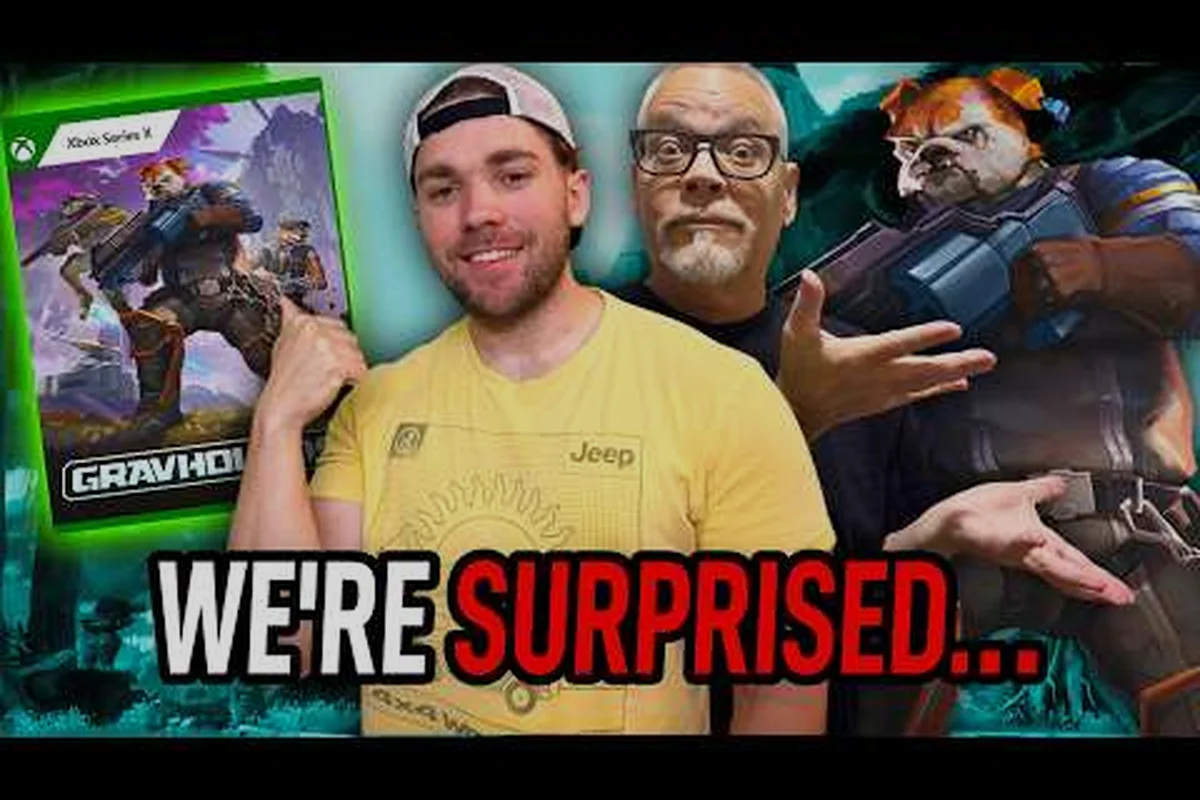
A useful GRAVHOUNDS tier list maker turns scattered crew impressions into a clear ranking for your squad. It matters because role fit, team size, and mission style can move a valuable Gravhound from sleeper pick to S-tier contender. For example, a Raider that feels weak in a one-Gravhound extraction team may rank much higher in a four-player squad that prioritizes loot coverage over raw firepower. Start with existing GRAVHOUNDS tier lists, note each unit’s class, preferred weapon range, mobility, and squad synergy, then use the maker to separate S-tier contenders from underrated picks and overrated specialists rather than judging crew members by isolated damage numbers.
What a GRAVHOUNDS Tier List Maker Measures
A tier list is only as useful as the criteria behind it. The best rankings separate raw power from practical value, which means a crew member can look weaker on paper yet deliver more value in a common mission. Before placing any Gravhound, decide what the list should reward: damage, survival, control, flexibility, or contribution to a coordinated group.
The custom ranking axis is the central idea. Rather than assigning a permanent label based on popularity, you define what “top tier” means for your group. A solo player may value mobility and self-sustaining damage, while a three-person team might prioritize revive utility, crowd pressure, and target protection.
| Ranking factor | What it measures | Why it matters | Beginner-friendly weight |
|---|---|---|---|
| Damage output | Damage against useful targets | Speeds up fights and expeditions | High |
| Survival | Ability to remain effective under pressure | Protects the run when positioning fails | High |
| Role utility | Damage, control, support, or mixed value | Improves team composition | Very high |
| Flexibility | Number of viable missions and builds | Reduces the cost of a narrow pick | Medium |
| Team synergy | Fit with common crew combinations | Strengthens group play | Medium |
| Ease of use | Clear positioning and reliable performance | Helps new players execute | High for beginners |
This measurement model gives the gravhounds tier list maker a consistent baseline. It also prevents the rankings from becoming a popularity contest. If a crew member performs well in several situations but lacks standout damage, the right result may be A tier rather than S tier.
Making the Ranking Criteria Specific
Vague labels such as “good” or “bad” create arguments because every player measures something different. Use narrower questions when evaluating a Gravhound. Can the crew member contribute without perfect support? Does it punish a failed engagement? Does it remain useful when the target changes? Is the role already covered by another teammate?
These checks are especially important when comparing the gravhounds s tier gravhounds, a group that often includes highly effective but demanding choices. An S-tier label should mean that a unit is both strong and worth selecting when the player needs that particular function. It should not mean “always first” in every squad.
Building a Reusable Scorecard
A scorecard makes the final tier easier to explain because each rating captures a different performance signal. For example, a GRAVHOUNDS unit rated 5 in combat impact but 2 in reliability may still fall below a balanced unit once the weighted total is calculated. Use the 1–5 scale consistently, apply the category weights shown below, and document why each score changed; the visible reasoning matters more than the numerical total when comparing S-tier contenders, underrated picks, and potentially overrated units.
| Score category | Example rating scale | Suggested weighting for a general list |
|---|---|---|
| Combat impact | 1 to 5 | 30% |
| Reliability | 1 to 5 | 20% |
| Role coverage | 1 to 5 | 20% |
| Build flexibility | 1 to 5 | 15% |
| Team compatibility | 1 to 5 | 10% |
| Beginner accessibility | 1 to 5 | 5% |
These weights deliberately favor combat impact and reliability without ignoring composition. For example, a GRAVHOUNDS unit scoring 5 in combat impact and 2 in reliability contributes 2.0 weighted points to the scorecard, so a consistently effective 4/4 unit can outrank a higher-ceiling but less dependable pick. Treat these values as a framework rather than verified game statistics, then record your own match results and revise scores when practical performance differs from expectations.
Choosing Tiers for Your GRAVHOUNDS Crew
A conventional tier structure works best when each label has a plain-language definition. S tier should represent exceptional choices, A tier strong and dependable picks, B tier useful options with clear conditions, and C tier situational picks that need favorable teams or specific play. Lower tiers can cover weak early options without implying they are permanently unusable.
The gravhounds where to find tier lists question is important because prewritten rankings often use different assumptions. One list may assume a full squad, another a solo expedition, and another only the opening crew available to a new account. Treat every list as a hypothesis and compare the criteria before borrowing its conclusions.
| Tier | Working definition | Typical recommendation |
|---|---|---|
| S | Elite impact with strong consistency | Prioritize when their role fits the mission |
| A | Excellent options with only minor limits | Safe choices for most squads |
| B | Strong specialists or dependable generalists | Pick for a clear team need |
| C | Situational picks with meaningful drawbacks | Use only when conditions align |
| D | Limited early-game or narrow-role value | Replace as better options appear |
| Unranked | Insufficient practical evidence | Test before assigning a tier |
This structure also makes the gravhounds tier list for beginners easier to read. New players need a ranking that explains not only who is strongest, but also whether a lower-ranked option can still fill a missing role. A reliable tank can be more valuable than a higher-ranked damage dealer when the squad cannot survive its opening engagement.
Reading S-Tier Recommendations Carefully
An S-tier recommendation works best as a conditional statement. A Gravhound may belong in this tier because of exceptional damage, but only when the player avoids a specific weakness. Another may excel because it contributes safely without demanding constant attention, making it especially strong for beginners or less aggressive teams.
Do not treat the gravhounds s tier gravhounds as a permanent class. Mission goals, crew size, available equipment, and personal execution can all change the result. Preserve the reasoning next to each name so that a future patch or build shift does not erase the logic behind your ranking.
Separating Personal Picks from Consensus Picks
There is value in recording both consensus and personal results. A consensus category identifies what community experience generally supports, while a personal category captures your own testing. Keeping them separate reduces the chance that one strong run turns into an exaggerated label.
A useful spreadsheet structure includes the crew member, role, tested build, mission, difficulty, consistency rating, and final tier. It can also track whether the result came from community reports or direct play, which helps distinguish established patterns from personal impressions.
Ranking Underrated and Overrated GRAVHOUNDS Picks
Every Gravhound falls into one of three practical categories: confirmed strength, hidden value, or overhyped potential. Community reports often praise the loudest or newest choices, so the gravhounds underrated gravhounds deserve testing with the same attention given to established favorites.
Start with a hidden-value audit. Look for crew members whose contribution remains useful when another teammate performs the primary damage. Check whether they survive repeated failures, provide reliable control, or make better use of limited equipment. These qualities are easy to overlook because they do not always produce the largest numbers on a damage display.
| Rating label | Identification signal | What to test next | Result to record |
|---|---|---|---|
| Confirmed strength | Consistent performance across reports and trials | Change only the build or mission | Usually S or A |
| Hidden value | Strong niche contribution with a manageable weakness | Test a second mission type | Often A or B |
| Overhyped | Strong first impression but weak repeatability | Compare two complete runs | Move to B or C |
| Unproven | Little usable evidence | Run a standardized trial | Keep unranked |
| Situational | Excellent only with a precise condition | Document the condition | Tier with a note |
The reverse audit helps identify the gravhounds overrated gravhounds. A character can be overrated when its strongest clip omits the positioning required for normal play, when team support carries most of the result, or when a difficult mission is confused with ordinary progression. One impressive clip is evidence, but repeated performance across comparable scenarios is stronger evidence.
Test Rules for Fair Comparisons
Change one variable at a time whenever possible, because a GRAVHOUNDS tier list maker comparison is only useful when each result has a clear cause. Keep mission type, crew size, difficulty, and equipment consistent, then test one crew member or build replacement against the same baseline. For example, if you are comparing a support Operative against a damage-focused Operative, preserve the same squad slot, mission difficulty, and equipped modules. If performance improves after changing several factors, you cannot confidently credit the crew member or its build.
Use a simple scoring sheet for each GRAVHOUNDS candidate: assign separate ratings for damage output, survival, utility, and squad impact on a consistent scale, such as 1–5. For example, a damage Operative can score 4 for damage but 2 for survival, while a support Operative may score 3 for utility despite lower damage. Adding these category scores to a GRAVHOUNDS tier list maker makes rankings easier to explain and helps reveal whether an S-tier pick genuinely outperforms a lower-rated crew member across more than one mission condition.
-
Complete the same mission type twice with each candidate.
-
Record damage, survival time, and mission progress separately.
-
Note whether the crew member created opportunities for teammates.
-
Mark failures caused by player positioning as distinct from build failures.
-
Review results after the squad composition changes.
These checks are practical rather than universal benchmark rules. Because GRAVHOUNDS data can shift with updates and platform differences, label personal observations as based on community testing or your own runs rather than presenting them as confirmed rankings. For example, note the patch version, mission difficulty, crew size, and whether a candidate was tested in a solo or co-op squad; the same Operative may perform differently when its role, equipped modules, or teammate support changes. When using a GRAVHOUNDS tier list maker, treat S-tier or underrated labels as provisional until repeated runs support them, and record the date and test conditions so later updates can explain any ranking changes.
Building Rankings for Solo, Co-op, and Beginner Play
A universal list usually serves no one particularly well. The most useful Gravhounds tier list maker offers separate modes for solo expeditions, coordinated co-op, and early-game teams, because each mode changes which metrics deserve the greatest weight. For example, the Solo preset prioritizes damage, survival, and self-recovery, while the Co-op preset gives more weight to role coverage and team synergy than to personal carry power. The Beginner preset should also expose build flexibility and reliability, since a Gravhound that survives mistakes is often more valuable than one that relies on precise execution.
Solo play raises the value of self-sufficiency and personal damage. Co-op rewards complementary roles and forgiving contribution. Beginner play values clarity, resilience, and the ability to recover from imperfect decisions. The same Gravhound can land in different tiers without either ranking being wrong.
| Play mode | Top priorities | Secondary considerations | Common mistake |
|---|---|---|---|
| Solo | Damage, survival, self-recovery | Build flexibility | Ranking by co-op potential |
| Co-op | Role coverage, team synergy | Personal damage | Overvaluing solo carry power |
| Beginner | Reliability, easy targeting, clear utility | Peak performance | Ignoring harder mission checks |
| Specialist | Mission-specific performance | General versatility | Calling every specialist S tier |
For team composition, the best GRAVHOUNDS crew for different play styles provides a useful companion to the custom ranking because it focuses on whether a choice fits a solo or co-op roster rather than assigning a universal label.
Beginner Ranking Adjustments
Beginner-friendly rankings should not simply remove damage from consideration. Instead, weight reliable contribution, forgiving positioning, and clear role value more heavily. A slightly weaker unit can be the better recommendation if it makes fewer mistakes and allows the player to understand what a complete squad needs.
The gravhounds tier list for beginners also benefits from uncertainty labels. If a promising Gravhound has only been tested in one situation, mark it provisional. This prevents an appealing first impression from being presented as a confident conclusion and makes the list easier to update.
| Beginner factor | Why it deserves extra weight | Question to ask |
|---|---|---|
| Role clarity | Easier to fit into a new squad | Is the job immediately obvious? |
| Consistency | Reduces repeated failed runs | Does performance hold after learning the fight? |
| Team protection | Creates room for better decisions | Does it help teammates survive mistakes? |
| Build simplicity | Lowers the cost of early optimization | Are gear choices easy to understand? |
| Recovery value | Keeps a run from ending early | Can it contribute after a rough opening? |
Co-op Ranking Adjustments
In co-op, the best unit is often the one that enables the rest of the squad to perform its intended function. A controller, protector, or support unit can produce a more convincing tier than a high-damage specialist whose value collapses when coordination breaks down. Record teammate-facing effects, not only the damage dealt directly.
For broader comparisons, the current GRAVHOUNDS crew tier overview can act as a consensus baseline. Your custom maker should then explain where it differs, whether because of mission conditions, squad size, or a newer build.
Updating Rankings After Builds and Patches
A tier list maker is only useful if it has an update routine. Save the date, game version when available, tested build, and mission conditions beside every result. Without those details, a ranking becomes difficult to interpret when players begin comparing unrelated situations.
| Change event | What should change | What should remain stable | Record |
|---|---|---|---|
| New crew member | Add provisional tier | Role criteria | Unlock date and test plan |
| Build revision | Recheck affected rating | Crew identity | Gear and mission details |
| Difficulty shift | Reweight completion speed | Core usefulness | Difficulty setting |
| Mission rotation | Run a second scenario | Role definition | Mission name or type |
| Community consensus shift | Compare methods | Personal evidence | Source and date |
The guide to tracking GRAVHOUNDS tier changes is useful for monitoring why rankings move, especially when a weapon or crew adjustment alters a previously strong build. Keep the old result visible until the new configuration has been tested under comparable conditions.
A Simple Weekly Review Routine
Reviewing rankings once a week prevents small fluctuations from causing unnecessary churn. First, collect new evidence from recent runs and community discussion. Next, separate reports that use comparable conditions from anecdotes that lack enough context. Then adjust only the affected characters and add a short note explaining each change.
Do not promote a unit because it appears in more videos, and do not demote it because one run failed. Require a pattern before moving a tier, except when a major patch makes old results clearly irrelevant. A short changelog can be more useful than a dramatic new ranking because it preserves the reasoning behind every adjustment.
Handling Conflicting Community Reports
Conflicting reports often reveal hidden variables rather than a simple disagreement. One player may rely on aggressive positioning, while another keeps distance and focuses on control. Their preferred builds may also solve different problems. Ask what changed, compare mission goals, and look for repeated conditions before choosing which result is more representative.
Community data is a useful signal, not a guaranteed fact, so entries in a GRAVHOUNDS tier list maker should distinguish player reports from repeatable combat evidence. For example, label a ranking as “reported” when it comes from one player’s Story Mode run, but support it as “community-tested” only when several players reproduce it under similar mission conditions. Keep personal observations separate, and avoid presenting estimated HP, damage, or cooldown values as fixed mechanics until those numbers are independently verified.
A Practical Workflow for Custom Crew Rankings
Start by choosing one mission style and one squad size. List the available crew members, assign each a primary role, and collect at least two comparable runs. Score performance, explain the result, and only then place the crew member into a tier.
| Step | Action | Output |
|---|---|---|
| 1 | Define the intended squad and mission | Clear ranking context |
| 2 | Record available crew and roles | Candidate list |
| 3 | Gather community and personal evidence | Evidence log |
| 4 | Run comparable trials | Performance notes |
| 5 | Apply weighted criteria | Scored comparison |
| 6 | Assign conditional tiers | Final custom list |
| 7 | Review after updates | Versioned changelog |
This workflow makes the gravhounds tier list maker transparent: each crew member’s tier is tied to a mission style, squad size, role, and comparable trial results rather than an unsupported opinion. For example, if a support crew member consistently improves survival through healing or crowd control, the maker can document that contribution separately from damage output. Another reviewer can then reproduce the scoring, challenge the weighting, or compare the result with existing GRAVHOUNDS tier lists while focusing on one disputed factor instead of rejecting the entire ranking.
Publishing or Sharing the Result
A shareable list should identify its scope in the first line. State whether it assumes solo or co-op play, whether it includes only available crew, and what date the evidence covers. Label provisional placements clearly so readers do not mistake a limited test for a settled verdict.
Add a short evidence column instead of writing long paragraphs beside every name. Use phrases such as “consistent across two mission types,” “requires careful positioning,” or “strong when paired with a controller.” These notes preserve practical detail without inflating the list with claims that cannot be checked.
Frequently Asked Questions
What is the best tier list maker for GRAVHOUNDS?
The best approach is a criteria-based tier list maker that separates damage, survival, role utility, flexibility, and team fit. No single preset is perfect for every squad, so the most valuable tool is one that records mission type, crew size, build, and personal results for each comparison.
Where can players find reliable GRAVHOUNDS tier lists?
Players can find useful community lists on the official gameplay channels, in player discussions, and on specialized tier-list sites. Reliability depends on dates and context: a strong list should state the tested version, explain its criteria, distinguish personal experience from community consensus, and avoid treating one mission as proof of universal dominance.
How should a beginner create a GRAVHOUNDS tier list?
Beginners should use a simple scorecard, compare crew in the same mission and squad size, and prioritize reliability, role clarity, and contribution over spectacular one-off performances. Keep unfamiliar Gravhounds provisional until they have been tested in multiple scenarios, then update their ratings with clear evidence instead of personal impressions alone.
Are S-tier Gravhounds always the first choices for a squad?
No. An S-tier Gravhound is normally an excellent choice when its role matches the mission, but squad composition, mission goals, equipment, and execution can favor a lower-ranked specialist. A flexible A-tier option may be more reliable for a new player, while a B-tier defender can outperform a high-damage pick when survival is the immediate need.
What are the most underrated and overrated Gravhounds?
Identifying them requires controlled comparisons because community reports can reflect unusual builds or missions. Look for consistently useful picks that lack attention and for flashy units whose performance collapses outside favorable conditions. Treat both labels as provisional until repeated trials and community evidence support a clear change in the custom ranking.