
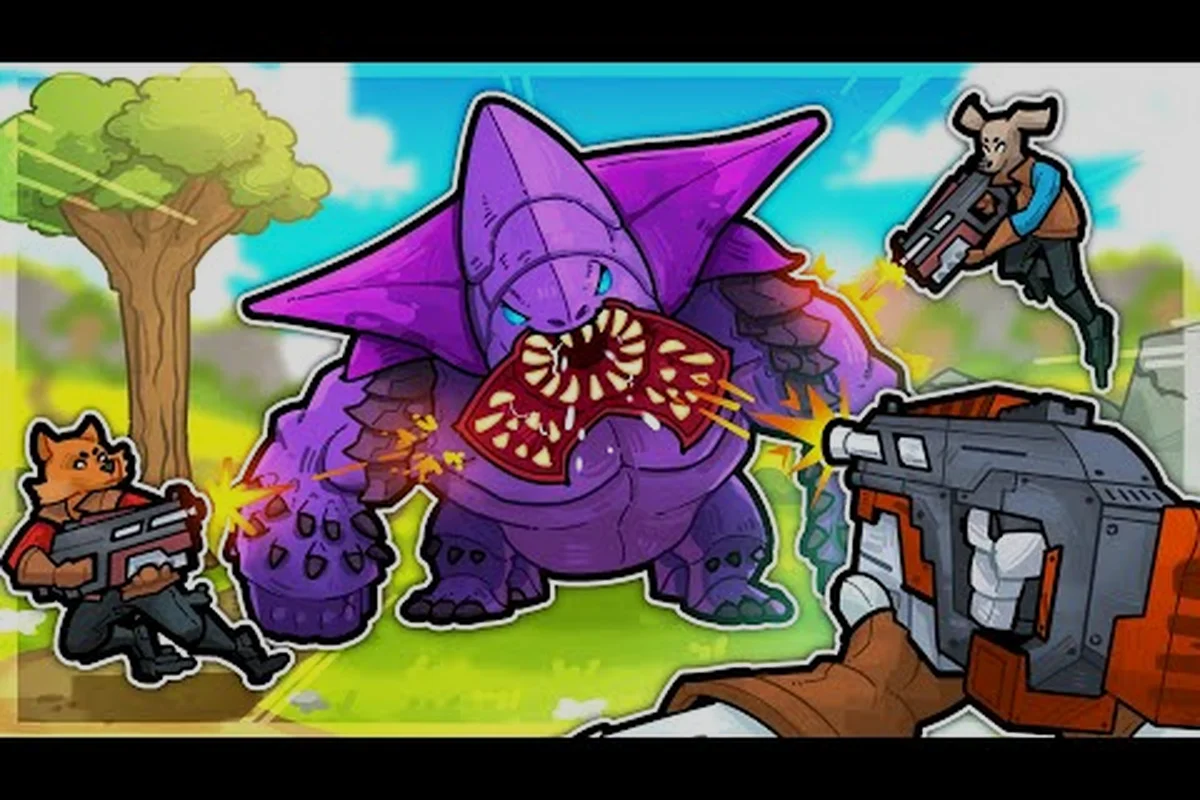
The gravhounds planet guide below ranks every confirmed world by danger, materials, and progression value, so you can pick a destination that matches your crew's readiness. Each planet entry explains why the world matters for your economy and what to expect from a shift there.
Gravhounds Planet Guide: Why Every World Matters
The gravhounds planet guide helps you judge every world in the gravhounds planet list by comparing hostile encounters, extractable materials, and the value of a planetary shift before committing to a risky drop. For example, a planet offering copper and crystal can support early equipment upgrades, while a high-threat world may deliver rarer minerals but require better weapons and stronger fuel reserves. Reviewing gravhounds planet names, gravhounds all planets entries, and gravhounds solar systems data lets you select a destination where the expected haul justifies the danger and travel cost.
What this planet reference covers
This reference groups the known planets by practical purpose instead of presenting a bare name list, making it easier to compare destinations against your current equipment. A scavenger with weak cargo capacity may favor a low-yield, low-risk world, while a pilot equipped for longer jumps and heavier fuel loads can consider a distant planet with rarer resources. Check each planet’s salvage value, gathering potential, travel risk, and required equipment before committing to an expedition.
The central takeaway is simple: planet value depends on the objective. A world that is poor for early salvage may still be ideal for a difficult gathering target, while a relatively quiet destination may lack the materials needed for a later expedition.
Gravhounds All Planets and Their Core Roles
The gravhounds all planets view is most useful when each destination is treated as a mission choice with a purpose. The known planet names can be compared by threat level and likely resource focus, but the exact map layout can change as progression opens new routes.
Because confirmed planetary details are limited in the available material, treat community estimates as provisional rather than permanent facts. The table below organizes the practical role of each known world without inventing fixed loot tables, enemy counts, or unlock requirements; for example, Verdant Reach is presented as a resource-rich arrival zone with early enemy pressure, while Eclipse is labeled a specialist endgame world built around maximum environmental pressure and late-run farming. Use those roles to compare intended risk and progression value, but verify changing routes, destination conditions, and extraction results against current in-game information.
| Known world | Planet role | Main risk | Best use |
|---|---|---|---|
| Verdant Reach | Resource-rich arrival zone | Early enemy pressure | Learning extraction and gathering |
| Scorched Expanse | Hazardous material world | Heat and stronger opposition | Mid-game resource hunting |
| Frostbound Margin | Remote survival zone | Cold exposure and isolation | High-risk, high-value expeditions |
| Ruined Expanse | Explored danger zone | Dense encounters and scarcity | Advanced scavenging |
| Eventide | High-tier challenge world | Escalated combat difficulty | Endgame gear and materials |
| Eclipse | Specialist endgame world | Maximum environmental pressure | Late-run farming and rare resources |
| Shattered Frontier | Frontier expedition zone | Unpredictable encounters | Advanced collection and endgame missions |
Reading the planet names
The Verdant Reach is the baseline for learning the movement and extraction loop, making its resource markers useful checkpoints before adding environmental pressure. Scorched Expanse intensifies that pressure and creates a stronger reason to improve gear, since surviving the heat hazard can determine whether a scavenging run ends in a successful extraction. Frostbound Margin changes the survival equation through cold exposure, while Ruined Expanse turns dangerous scavenging into the central risk, rewarding routes that minimize encounters rather than pushing directly toward every resource marker.
The final group—Eventide, Eclipse, and Shattered Frontier—belongs to advanced planning. These worlds are best approached with better weapons, a clear material target, and enough patience to abandon an inefficient route. Community reports also point toward remote planets as places where careful movement is often more valuable than rushing directly toward a resource marker.
Compare risk before reward
Risk in GRAVHOUNDS is cumulative. A distant destination adds travel exposure, unfamiliar terrain, and potentially stronger enemies to the normal extraction problem. This means the best world is not always the one with the rarest loot; it is the one where your current build can preserve enough resources to finish the run.
| Current situation | Better planetary choice | Reason |
|---|---|---|
| Learning the basic loop | Verdant Reach | Lower-complexity environment for practicing |
| Needing mid-game materials | Scorched Expanse | Useful risk increase without leaving the core progression loop |
| Preparing for a difficult expedition | Frostbound Margin | Rewards preparation and careful route planning |
| Optimizing an advanced harvest | Ruined Expanse | Better suited to experienced scavengers |
| Targeting endgame resources | Eventide | Built around high-level risk and preparation |
| Chasing the toughest materials | Eclipse | Maximum challenge for fully equipped teams |
| Exploring for uncommon finds | Shattered Frontier | Strong fit for late-game collection routes |
Gravhounds Planet List by Progression Stage
A gravhounds planet list becomes clearer when it follows progression. Early destinations teach the basics, middle worlds test equipment, and late planets ask players to balance extraction with ambition. Use the following stage plan to avoid jumping into a high-risk map before your build is ready.
Early-stage planetary shift
Your first planetary shift should favor a route with visible resources and room to learn enemy behavior. Verdant Reach offers the most forgiving place to compare movement speed, gathering output, and what happens when a hostile encounter interrupts an extraction.
At this stage, the goal is not maximum yield. It is to learn how long a successful gathering cycle lasts and which signs indicate a route is becoming too dangerous. The demo planets overview provides a focused comparison for the introductory set of seven destinations, including their difficulty and material roles.
| Early-run task | Preferred world | Preparation |
|---|---|---|
| Learn gathering mechanics | Verdant Reach | Basic tools and a short route |
| Test a modest salvage run | Scorched Expanse | Repair supplies and a reliable weapon |
| Compare accessible materials | Any introductory destination | Bring enough inventory space |
| Practice avoiding fights | Verdant Reach | Prioritize escape routes over targets |
| Establish a repeatable farm | Scorched Expanse | Set a limit before enemy pressure rises |
Mid-game planetary shift
Once basic runs are reliable, Scorched Expanse and Ruined Expanse become more valuable because they reward stronger equipment and clearer objectives. A mid-game shift should be based on a missing material or a required yield, not on the assumption that a harder world automatically produces a better result.
Players should enter these destinations with a specific threshold: gather only the needed materials, avoid optional encounters, and leave when the cargo reaches a safe capacity. This approach reduces the time exposed to escalation while still improving the efficiency of each run.
Late-game planetary shift
Eventide, Eclipse, and Shattered Frontier are endgame choices. They may offer stronger incentives, but the routes demand better weapons, stronger movement control, and enough capacity to extract valuable cargo. The GRAVHOUNDS weapons guide is useful here because weapon performance can determine whether you can disengage from a difficult encounter or must commit to a longer fight.
| Progression goal | Main planetary option | Secondary option | Key requirement |
|---|---|---|---|
| Build endgame resources | Eclipse | Eventide | High-tier equipment |
| Complete challenging missions | Shattered Frontier | Eventide | Route knowledge and patience |
| Fill advanced material gaps | Ruined Expanse | Eclipse | Specific loot target |
| Expand collection coverage | Eventide | Shattered Frontier | Flexible extraction plan |
| Minimize exposure | Verdant Reach | Scorched Expanse | Conservative cargo limits |
Gravhounds Every Planet and Hidden Risk Signals
The gravhounds every planet comparison reveals a common design idea: difficulty can escalate through several layers at once. Longer travel, stronger enemies, environmental pressure, and limited extraction windows may overlap, so one visible threat should never be treated as the entire risk estimate.
Environmental danger
Scorched and frost-themed locations signal heat, cold, or other survival pressure. The exact effect values have not been verified from an authoritative source, so treat environmental damage as a variable to monitor rather than assigning a fixed penalty. If health, equipment condition, or cargo stability declines faster than expected, move to a safer route.
A sound rule on a GRAVHOUNDS planet is to reserve enough resources for the return trip, not merely for the target material. Resource value can change after a failed encounter: a routine mining run may force emergency travel spending, vehicle repairs, or a detour through another solar system. Before committing cargo capacity, compare the haul’s market value against the fuel, ammunition, repair materials, and medical supplies needed to return safely. If that margin disappears, the expedition’s profit has become a trap.
Enemy pressure
Enemy strength is easier to read than environmental data. Enemies approaching from multiple directions, enemy clusters near valuable resource areas, and a lack of safe escape space all suggest that the current route has crossed a difficulty threshold. The combat pressure margin is the time you can survive while gathering without losing control of the extraction.
| Risk signal | What it indicates | Best response |
|---|---|---|
| Repeated enemy contact | Route is contested or poorly timed | Change location or harvest time |
| Resource cluster near enemies | High competition for materials | Approach from a safer angle |
| Sudden loss of maneuvering space | Encounters may become unavoidable | Leave before engaging |
| Damage from terrain | Environmental danger is active | Carry protection and shorten the route |
| Cargo nearly full | Extraction risk rises | Stop gathering and head back |
| Unexplored area ahead | Unknown enemies or rewards | Clear it before committing |
Distance and extraction
Distance is an economic risk rather than a simple map measurement. Every additional segment can increase exposure to enemies and environmental effects. Long routes also make it harder to notice the difference between a valuable anomaly and a trap, especially when the destination is remote.
Plan backward from the return point. Decide where the cargo limit will stop collection, identify the nearest fallback location, and set a hard retreat condition. This turns the planet resource farming guide into a practical companion for refining which locations work best for repeatable harvests.
Gravhounds Planet Names and Resource Goals
A complete gravhounds planet names reference is only half of the decision because materials determine the purpose of the trip. The resources overview can help identify why a destination matters, but the planetary choice should always be tied to an actual crafting, repair, or upgrade need.
Match the world to the recipe
Start with the resource you need and then select the world most likely to support that target. If several destinations fit, use the lowest-risk option until your equipment can handle a more efficient route. Material value rises only when the resource reaches your base intact.
| Material need | First planetary choice | Upgrade path | Reason |
|---|---|---|---|
| Basic crafting materials | Verdant Reach | Scorched Expanse | Learn extraction before taking greater risks |
| Mid-tier crafting resources | Scorched Expanse | Ruined Expanse | Better yield with stronger equipment |
| Survival or repair stock | Scorched Expanse | Frostbound Margin | Pair gathering with preparation |
| Advanced components | Ruined Expanse | Eventide | Accept stronger encounters for better output |
| Endgame crafting resources | Eventide | Eclipse | Improve efficiency with premium gear |
| Rare expedition finds | Eclipse | Shattered Frontier | Use specialist routes and careful timing |
Run a short objective list
Before departing, write down one primary material, one optional material, and one quantity limit. This prevents a successful run from drifting into unnecessary combat when a new enemy group appears near the target. It also makes results easier to compare across worlds.
A good player should be able to answer three questions after a planetary shift: which material was collected, how much travel time was spent, and whether the route ended without a major loss. Those answers are more valuable than a vague judgment that one planet always produces more.
Avoid overextending the route
A greedy route can erase the benefit of a superior world. Keep gathering separate from combat when possible, and remember that the objective is to bank resources rather than to prove that every enemy can be defeated. High-risk planets reward players who understand when an encounter is not worth taking.
Gravhounds Solar Systems and Planetary Travel Choices
The phrase gravhounds solar systems points to the larger travel structure surrounding planetary missions. Multiple destinations create routes through connected space, and choosing the correct sequence can reduce unnecessary transitions, expose your crew to fewer threat zones, and make material collection more efficient.
Route planning fundamentals
A useful route has a purpose beyond moving the fastest between points. It should pass through a destination that contributes something required, avoid repeated travel through the same danger, and leave an emergency option if cargo or health becomes critical. The best route often starts with the lowest-risk available world and ends with the highest-value one that remains practical.
| Route style | Order | Advantage | Main drawback |
|---|---|---|---|
| Conservative | Verdant Reach to Scorched Expanse | Low learning risk | Lower maximum yield |
| Balanced | Scorched Expanse to Ruined Expanse | Strong mix of yield and threat | Requires competent combat |
| Specialist | Ruined Expanse to Eventide | Targets advanced materials | Vulnerable to limited inventory |
| Endgame | Eventide to Eclipse | Focuses on top-tier goals | Heavy equipment demands |
| Flexible | Shattered Frontier and adjacent routes | Supports exploration | Less predictable timing |
Change planets only when ready
A planetary shift should respond to a changed need. Move when your current world no longer supplies the necessary resource, when stronger equipment has improved your odds, or when a mission introduces a new destination. Avoid moving merely because a harder option exists; difficulty without purpose creates unnecessary losses.
The upcoming planets overview can help you compare potential destinations before committing to a planetary shift. Treat it as a planning signal rather than a confirmed roadmap: a listed planet name or date may still change, and its resource, hazard, or mission traits may not be final. For example, you could mark a candidate system as viable only if it addresses your current extraction bottleneck, then verify its actual gravity, landing conditions, and progression value before leaving the planet you already occupy.
Account for return travel
The outbound route is only half the mission. Return travel may encounter enemies that were defeated earlier, and your movement may be slower if equipment is damaged or cargo is heavy. Keep the return plan realistic by maintaining recovery supplies and choosing extraction points before the cargo becomes difficult to manage.
A practical setup includes one defensive option, one emergency consumable, and a route that avoids the area where the previous fight occurred. These small precautions can matter more than another material node because they preserve the value of everything collected so far.
Gravhounds How Many Planets: Final Count and Checklist
The question of gravhounds how many planets has a simple answer for the current seven-world set: seven known planetary destinations. Count them in the demo as Verdant Reach, Scorched Expanse, Frostbound Margin, Ruined Expanse, Eventide, Eclipse, and Shattered Frontier.
Because game development can add or revise destinations, verify the in-game destination display when possible. The seven-world count reflects the available seven-planet structure used by this guide and the related demo coverage, not a promise that future updates will preserve every entry.
Seven-planet reference at a glance
| # | Planet name | Difficulty role | Priority |
|---|---|---|---|
| 1 | Verdant Reach | Beginner learning | Learn and establish a route |
| 2 | Scorched Expanse | Early escalation | Gather useful mid-range resources |
| 3 | Frostbound Margin | Survival challenge | Prepare for environmental danger |
| 4 | Ruined Expanse | Advanced scavenging | Target specific advanced materials |
| 5 | Eventide | Endgame combat | Secure high-tier components |
| 6 | Eclipse | Specialist challenge | Attempt the toughest collection goals |
| 7 | Shattered Frontier | Exploration endgame | Search for uncommon expedition finds |
Pre-shift checklist
Before changing worlds, confirm that you know the primary material, the planned cargo limit, the extraction route, and the condition of your equipment. These four checks prevent most avoidable planetary mistakes. The four-point shift check is a compact routine that can prevent a productive gathering route from turning into a costly emergency retreat.
-
Define the exact material requirement before leaving.
-
Set a cargo limit that preserves extraction capacity.
-
Identify at least one fallback location near the target.
-
Compare the destination against your strongest available weapon.
-
Review which resources your crafting plan actually requires.
-
Leave when the objective is complete instead of chasing one extra node.
Key takeaway
The gravhounds planet guide ultimately teaches prioritization rather than a fixed tier. Verdant Reach supports learning, Scorched Expanse rewards basic escalation, Frostbound Margin tests preparation, and the remaining four worlds support increasingly specialized missions. Match the destination to the resource target, respect travel and extraction costs, and treat the seven-planet list as a decision framework rather than a simple difficulty ranking.
Frequently Asked Questions
What are all the planets in GRAVHOUNDS?
The current seven-planet list includes Verdant Reach, Scorched Expanse, Frostbound Margin, Ruined Expanse, Eventide, Eclipse, and Shattered Frontier. They progress from introductory gathering and learning toward environmental, combat, exploration, and endgame challenges. Check the in-game destination display for the latest confirmation.
Which planet should beginners choose in GRAVHOUNDS?
Verdant Reach is the most practical starting choice because it lets players learn movement, gathering, and extraction before committing to demanding routes. Scorched Expanse becomes useful after basic gear is dependable and you have a specific material target. Avoid choosing a late planet merely because its rewards sound better.
Are all seven GRAVHOUNDS planets equally dangerous?
No. Each world presents a different combination of enemy pressure, environmental conditions, travel demands, and resource value. Verdant Reach supports the learning phase, while Eventide, Eclipse, and Shattered Frontier belong to advanced runs. Difficulty should be evaluated against your equipment, route knowledge, and extraction capacity.
How do I choose the best planetary destination?
Begin with the material or mission you need, then select the lowest-risk world that can provide it. Bring a defined cargo limit, preserve recovery options, and plan the return route before committing to a distant target. If two worlds offer the same resource, the safer option is usually more efficient until your equipment supports the harder route.
Does the number of GRAVHOUNDS planets stay at seven?
Seven is the count covered by the current seven-planet structure, but later updates may add, replace, or revise destinations. Use this guide as a practical reference for the current lineup while checking official announcements or the game interface for future changes. Planet availability and difficulty can also vary by version.